Online Kindergarten

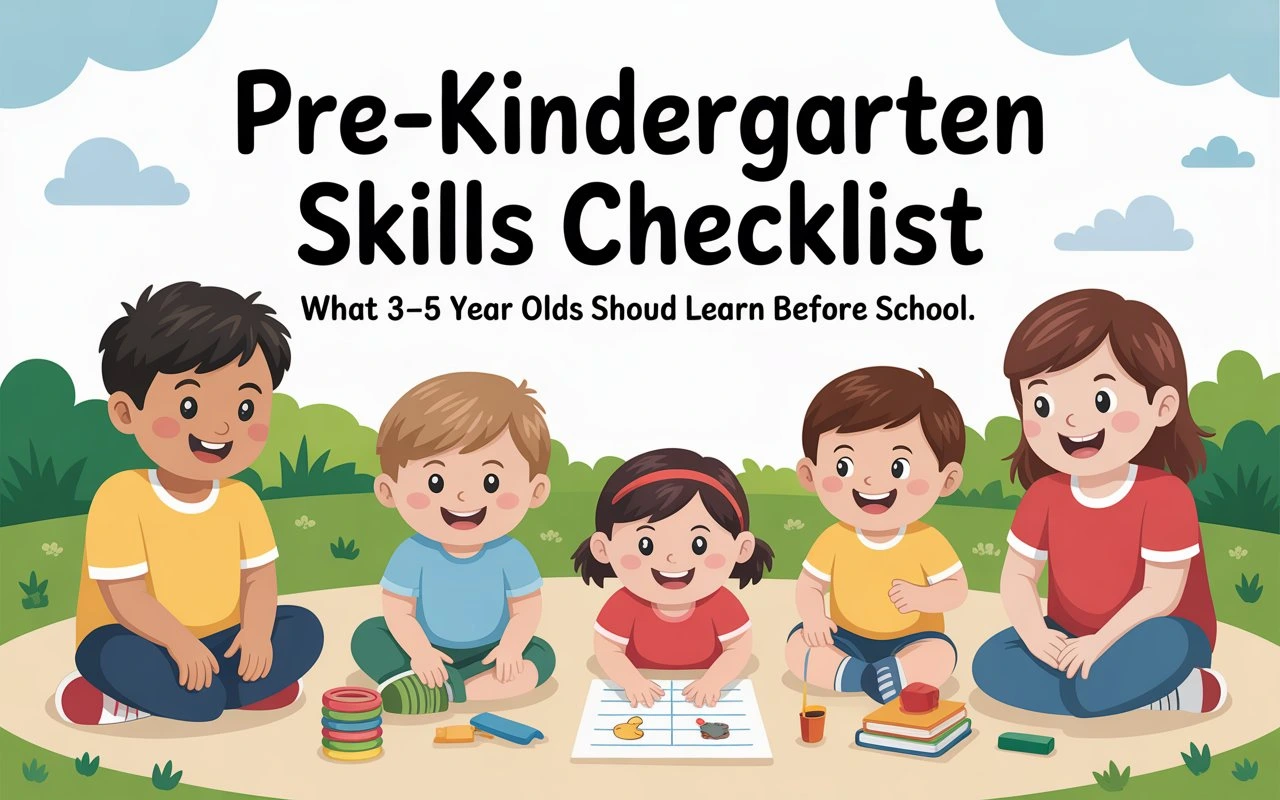
Pre-Kindergarten Skills Checklist: What 3–5 Year Olds Should Learn Before School

  • Nov. 28, 2025, 8:41 p.m.
Pre-Kindergarten Skills Checklist 2025: 3–5 Year Olds Must Learn

Preschool Readiness Checklist 2025: What Your Child Should Know Before KG

Parents often worry about whether their child is ready for school. Readiness is not about reading early or solving sums. It’s mainly about confidence, communication, independence, the ability to follow simple routines, and small everyday skills that help a child feel comfortable in a classroom.

This guide gives a clear and practical Pre-Kindergarten Skills Checklist covering everything 3–5 year olds usually develop before starting school.

What Is a Pre-K Skills Checklist?

A pre-kindergarten skills checklist helps you understand what children usually learn between ages 3 and 5. These are not strict rules. Every child grows at their own pace. This list simply shows the core skills that support early learning.

preschool readiness checklist for online kindergarten program.

Pre-K Skills Checklist for 3–5 Years Children

1. Social & Emotional Skills

Most children at this age start to:

  • Play with others, share, and take turns for a short time.
  • Separate from parents with a little upset but settle soon.
  • Follow simple rules like sitting for storytime or lining up.
  • Name basic feelings and talk about them.
  • Calm down with an adult’s support.

These skills help children join group activities and feel emotionally safe.

2. Self-Help & Independence

Before starting school, it helps if children can:

  • Use the toilet, wipe as best they can, flush, and wash hands.
  • Eat on their own and manage simple lunch items.
  • Pull up pants, handle elastic waistbands, wear shoes, and try zippers.
  • Take care of small belongings like their bag or bottle.

These small tasks make school routines easier.

3. Language & Communication

Kindergarten-ready communication looks like:

  • Speaking in short sentences in 3–5 words or more.
  • Following the 2–3 step instructions.
  • Answering simple questions.
  • Talking about familiar events.
  • Enjoying books, stories, and pictures.

A child doesn’t have to speak perfectly, just clearly enough to be understood.

Get your free demo class — click to join now

4. Early Literacy & Numeracy

Children do not need to read or write sentences.

Key early concepts include:

  • Identifying shapes, colours, and a few letters, usually from their name.
  • Noticing print on signs, logos, labels.
  • Knowing how a book works, like turning pages, looking at pictures.
  • Counting small sets of objects 5–10 with support.
  • Understanding more/less, big/small, sorting, matching, and basic patterns.

These are the foundation, not advanced academics.

5. Thinking, Play & Motor Skills

Children at this age often start to:

  • Use imagination in pretend play.
  • Stay with one activity for a few minutes.
  • Run, jump, climb, pedal a tricycle.
  • Hold crayons, draw simple shapes, and begin using scissors.

Strong play skills support future learning in school.

What Children DO NOT Need Before School

Parents often worry unnecessarily. Your child does NOT need to:

  • Read independently
  • Write neatly
  • Know all letters or numbers
  • Do sums
  • Write sentences

Kindergarten is where these skills develop slowly and naturally.

Activities to Build Social & Emotional Skills (3–5 Years)

Here are simple activities you can do at home or in class:

Emotion Recognition

  • Emotion charades
  • Making emotion masks
  • Feelings collage

Role-Play & Stories

  • Pretend doctor, teacher, or shop
  • Story discussions- How does the character feel?

Group Games

  • Simon Says
  • Duck Duck Goose
  • Red Light, Green Light
Get your free demo class — click to join now

Creative Expression

  • Colouring emotions
  • Puppets and dress-up
  • Simple art activities

Everyday Practice

  • Helping with chores
  • Breathing exercises
  • Small responsibilities

These activities slowly build confidence, empathy, and communication.

Easy Daily Routines That Build Responsibility

Daily routines make a big difference. Keep them simple and predictable.

Morning Routine

  • Wake up at the same time
  • Brush teeth, wash up, dress with minimal help
  • Pack their own bag (with support)

Mealtime Routine

  • Set the table
  • Serve small portions
  • Clear the plate after eating

Play & Clean-Up

  • Make tidy-up a short game
  • Help with small chores

Evening Routine

  • Choose pajamas
  • Brush teeth
  • Pack items for the next day
  • Follow a visual schedule if needed

These routines teach children to manage themselves step by step.

How Parents Can Support School Readiness

  • Read together for 10–15 minutes daily
  • Use simple conversations during daily activities
  • Allow independent attempts (even if messy)
  • Give choices (“Do you want blue or yellow?”)
  • Use calm, steady routines
  • Praise effort, not perfection

Small daily habits build long-term confidence.

Pre-K Readiness: What Your Child Should Know Before School

Starting kindergarten is a big step, and many parents wonder if their child is ready. Readiness is not just about letters or numbers. It’s about communication, simple routines, emotional growth, and basic independence. A pre-kindergarten skills checklist helps you see where your child is now and what they may still need to practice.

For a full breakdown of readiness skills, see the article below


Kindergarten Readiness Guide 2025: Skills, Checklist & Requirements Every Parent Should Know.
What Should a Child Know Before Kindergarten? Full Skill Breakdown

Why a Structured Online Kindergarten Program Helps

A good Pre-K program supports children through:

  • Guided activities
  • Story sessions
  • Early literacy and numeracy
  • Social-emotional learning
  • Classroom routines

Children get familiar with what school feels like, making the first day easier and less stressful.

Get your free demo class — click to join now

Give Your Child a Confident Start with Interval Learning

Interval Learning offers an Online Kindergarten Program designed for 3–5 year olds.
The program focuses on:

  • Early communication skills
  • Pre-literacy and pre-numeracy
  • Social and emotional learning
  • Independence and daily routine skills
  • Activity-based lessons

If you want a warm, structured environment that prepares your child for school, Interval Learning is a strong choice.

Explore Interval Learning’s Online Kindergarten Program and help your child step into school with confidence. Contact us today!

Get your free demo class — click to join now

Frequently Asked Questions

They should have basic social, emotional, language, self-help, and early learning skills — not advanced academics.

If they can follow simple instructions, play with others, manage small tasks, and express basic needs, they’re usually ready.

No. They only need early literacy concepts like letters, shapes, and enjoying books.

Use routines, reading time, pretend play, small chores, and simple learning conversations during the day.

Interval Learning uses structured, activity-based classes that build communication, early academics, and social skills naturally.

Yes. Teachers use gentle methods and slow exposure to help children feel safe and comfortable.

Yes. The program focuses on personalised attention and age-appropriate activities.

Author Images
INTERVAL LEARNING

Interval Learning is an online platform that offers one-on-one tutoring in both academic and non-academic subjects. We match students with skilled tutors to create a personalized learning experience across a range of topics. Our resources cover study tips, education trends, and personal development advice to help students, parents, and educators reach their goals. At Interval Learning, we focus on making education accessible, engaging, and suited to each learner’s needs.

The Best Online Tutoring Platform That Meets All Your Child’s Needs

Interval is your child’s dedicated academic partner, offering personalized learning experiences crafted just for them. With passionate tutors and a nurturing environment, we ensure that every lesson aligns with your child’s unique needs, empowering them to thrive and excel in their studies while building confidence.

Get started now
Book a Demo