Online Kindergarten

LKG, UKG & Kindergarten Reading Comprehension: Age-Wise Skills, Activities & Practice Ideas

  • Nov. 29, 2025, 3:39 p.m.
Best Reading Activities for LKG, UKG & Kindergarten (KG1–KG2)

Reading for Kindergarten: LKG & UKG Skills, Daily Routine & Free Worksheet Ideas

Reading comprehension in LKG, UKG, and Kindergarten develops slowly and naturally. Children move from understanding pictures and listening to stories to predicting what will happen next to finally answering “why” and “how” questions.
For ages 3 to 6, the goal is simple: build listening skills, vocabulary, curiosity, and a love for stories. Early reading should feel enjoyable, not like pressure.

In this guide, you’ll learn age-wise reading skills, simple activities, daily routines, and the best worksheets for kindergarten reading. Whether your child is in LKG, UKG, KG1, or KG2, these ideas will make learning fun and meaningful at home.


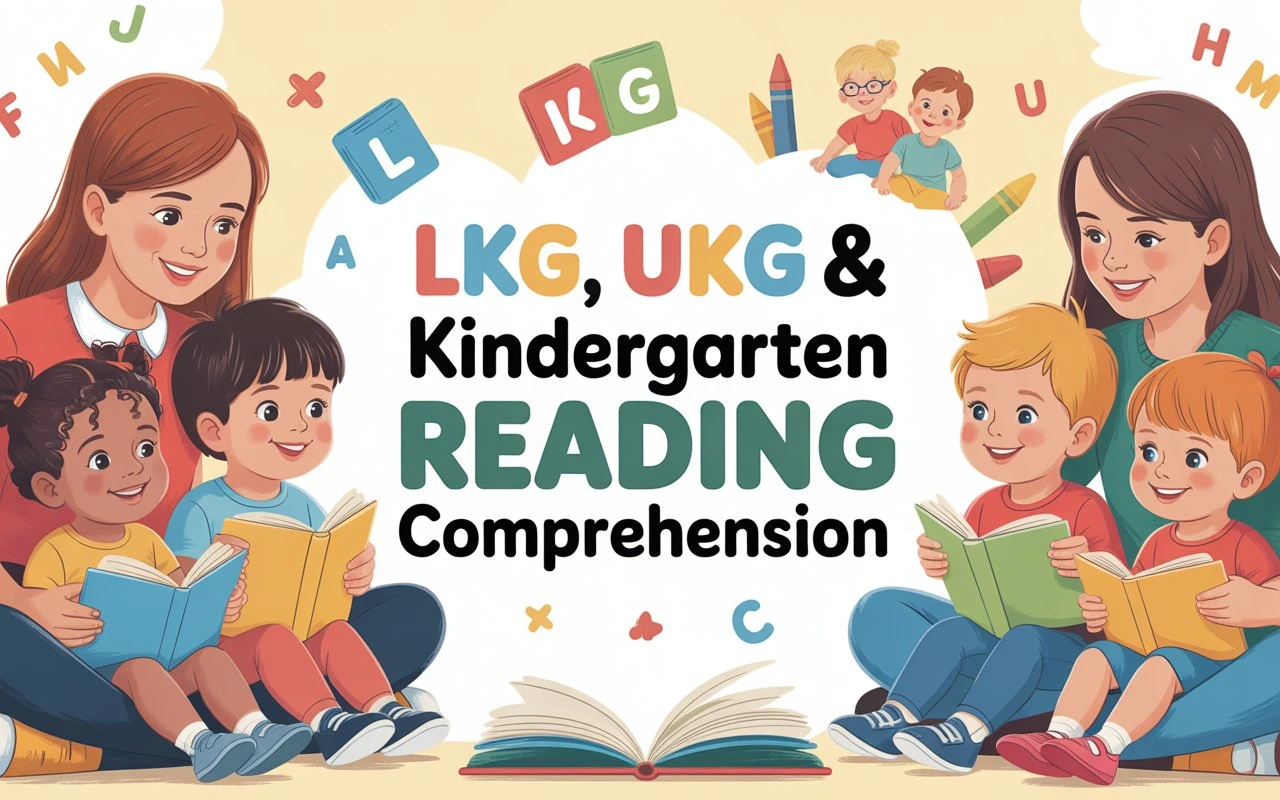
 Four diverse, happy children are engaged in educational activities like reading and coloring, focusing on eading for KG1 & KG2.

What Reading Comprehension Really Means for Kindergarten

Reading comprehension simply means how well a child can understand what they hear or read.
It includes looking at pictures, answering questions, and connecting stories to real life.

  • Understanding pictures and scenes
    Children explain what they see, identify objects, and talk about characters. This builds early comprehension skills.
  • Answering simple questions
    WH questions like who, what, and where help them focus on important details.
  • Predicting what happens next
    Children learn to think ahead, observe clues, and build imagination.
  • Retelling events in order
    Saying the story in their own words improves memory and communication.
  • Relating stories to daily life
    When a child says, “This is like when we went to the park,” they are building real comprehension.

Age-Wise Reading Skills for LKG, UKG & Kindergarten

LKG Reading Skills (3.5–4.5 years)

At this stage, children learn mainly through pictures, sounds, and listening. Reading should feel like a fun conversation, not a task.

  • Understands short picture stories
    Simple stories with big visuals help children stay focused and understand easily.
  • Answers who/what/where questions
    Asking small questions during reading builds attention and reasoning.
  • Identifies characters and objects
    This improves observation and helps children understand the main idea.
  • Repeats or retells tiny parts of the story
    Even a one-line retelling builds confidence and memory.
  • Recognizes rhyming words
    Rhymes support sound awareness, which is essential for future reading.
  • Learns basic book-handling skills
    They begin to understand left–right, front–back, and how to turn pages.
Get your free demo class — click to join now

UKG Reading Skills (4.5–5.5 years)

Children in UKG start making sense of longer stories and connecting ideas. They also begin noticing written words around them.

  • Follows slightly longer stories
    Their attention span improves, so they can understand more details.
  • Predicts what comes next
    Prediction shows active listening and deeper thinking.
  • Talks about characters’ feelings
    This builds emotional understanding and empathy.
  • Retells beginning, middle, and end
    With support, children can explain story structure.
  • Recognizes familiar words
    They start identifying their name, labels, and common signs.
  • Matches spoken words with pictures
    This is the first step toward connecting spoken language with printed text.

Kindergarten Skills (5–6 years / KG1 & KG2)

Kindergarten children slowly move toward early reading and simple decoding.

  • Answers full WH questions
    Who, what, when, where, why, and how questions strengthen comprehension.
  • Sequences 3–4 events
    This shows they understand the story flow clearly.
  • Connects story to real experiences
    Personal connection improves memory and interest.
  • Starts decoding simple words
    Phonics and sight words help them read basic sentences.
  • Uses pictures for clues
    Visual hints guide them when they face new words.
  • Summarizes main idea in one line
    This builds clarity and confidence in expression.

Reading Activities for LKG Students

LKG reading activities should be simple, playful, and based on talking, listening, and observing.

Picture Talk

A picture can start great conversations and build vocabulary.

  • Ask basic questions
    “What do you see?” or “Who is this?” helps children describe clearly.
  • Encourage full sentences
    This builds communication and sentence formation.

Short Read-Alouds

Short stories with big pictures make reading enjoyable.

  • Point, repeat, act
    Let your child point to characters and repeat simple words.
  • Focus on meaning, not reading words
    LKG is mainly about understanding.
Get your free demo class — click to join now

Rhyme & Rhythm Games

Rhymes help children hear and play with sounds.

  • Use simple rhyme pairs
    Cat–bat, sun–fun—these make sound patterns easy to learn.
  • Add actions or claps
    Rhythm makes learning active and memorable.

Simple Sequencing

Sequencing teaches order and logic.

  • Use 2–3 picture cards
    Seed → plant → flower builds early story sense.
  • Teach “first–then–last.”
    Simple language helps children explain clearly.

Reading Activities for UKG Students

UKG activities should encourage thinking, predicting, and explaining stories.

Story Retell with Support

Retelling helps children understand the story structure.

  • Use “First–Then–Finally”
    This gives them a simple format to follow.
  • Use fingers or picture cards
    Visual support makes retelling easier.

Prediction Questions

Prediction keeps them active during reading.

  • Ask “What will happen next?”
    This improves reasoning and imagination.
  • Pause at interesting moments
    It helps them think beyond the text.

Character & Feeling Talk

Understanding feelings builds empathy.

  • Ask about emotions
    “Why is he happy?” encourages deeper thinking.
  • Connect to real life
    This makes stories meaningful and relatable.

Matching Sentences to Pictures

A gentle introduction to linking text and meaning.

  • Start with one-line sentences
    Simple sentences build confidence.
  • Let them choose matching pictures
    This strengthens comprehension and word-picture association.

Reading Activities for Kindergarten (KG1 & KG2)

Kindergarten activities should mix comprehension, phonics, and simple reading.

Short Passages + WH Questions

Passages with pictures are perfect for beginners.

  • Ask who/what/where/why
    These questions develop complete understanding.
  • Allow oral answers first
    Speaking first reduces pressure and builds clarity.

Five-Finger Retell

A structured and easy retell method.

  • One finger = one idea
    Character, setting, problem, events, ending.
  • Repeat this routine often
    It becomes automatic over time.
Get your free demo class — click to join now

Visualization (Mind Movie)

Children love imagining scenes.

  • Ask them to close eyes and imagine
    This builds deeper comprehension.
  • Let them describe or draw
    Drawing improves memory and detail recall.

Everyday Print Reading

Real-life reading builds practical confidence.

  • Use labels, signs, and boards
    Children start recognizing familiar words.
  • Ask how they guessed the word
    This improves observation and reasoning.

A Simple 15-Minute Daily Reading Routine

A short daily routine works better than long practice sessions.

  • Minute 1–3: Picture Talk
    Warm up with any picture and simple questions.
  • Minute 4–8: Read-Aloud
    Use different voices and pause for predictions.
  • Minute 9–12: Quick Comprehension Activity
    Retell, draw, sequence, or answer simple questions.
  • Minute 13–15: Rhyme or Word Game
    End with something light and fun.

This structure keeps reading stress-free and engaging.

Kindergarten Reading Worksheets: What to Use

Worksheets help children practice phonics, sight words, and comprehension in a structured way.

Useful Worksheet Types

  • Phonics worksheets
    Blending, CVC words, and sound patterns build decoding skills.
  • Sight word worksheets
    High-frequency words increase reading fluency.
  • Short comprehension worksheets
    Small passages with questions help children understand stories independently.
  • Rhyming worksheets
    Rhyming patterns improve sound awareness.
  • Alphabet worksheets
    Letter recognition and beginning sounds reinforce early literacy.

Where to Find Free Worksheets

  • K5 Learning
  • Education.com
  • Superstar Worksheets
  • Super Teacher Worksheets
  • Canva templates
  • KindergartenWorksheets.net

Each platform offers printable resources suitable for LKG, UKG, and Kindergarten.

Get your free demo class — click to join now

How Parents Can Support Reading at Home

You don’t need many materials. A simple routine and regular conversations make the biggest impact.

  • Preview the book
    Look at the cover and guess the story together.
  • Ask questions during reading
    This keeps your child involved and alert.
  • Do one small activity after reading
    Draw, retell, or act out a scene to reinforce understanding.

Why Reading Skills Matter for KG1 & KG2

Strong reading comprehension affects everything your child learns later—language, writing, thinking, and confidence.

  • Builds stronger vocabulary
    Children understand and use more words.
  • Improves memory and focus
    Retelling and sequencing boost attention.
  • Supports school readiness
    Kids feel prepared for Class 1 and beyond.

Pre-K to KG: Essential Readiness Skills 2025: Simple Checklist

Starting kindergarten is a big milestone, and it’s normal for parents to wonder if their child is truly ready. Readiness is not just ABCs or counting—it includes how your child communicates, follows routines, plays with others, and manages simple tasks on their own. A clear pre-K skills checklist helps you see where your child is doing well and where they may need a little more support. 

For a full guide, explore our blogs below

Kindergarten Readiness Guide 2025: Skills, Checklist & Requirements Every Parent Should Know.
10 Essential Kindergarten Readiness Skills Parents Often Overlook
What Should a Child Know Before Kindergarten? Full Skill Breakdown
Reading & Writing Skills for Kindergarten: What Parents Should Teach at Home
Pre-Kindergarten Skills Checklist: What 3–5 Year Olds Should Learn Before School

Why Choose Interval Learning for Kindergarten Reading

Many websites only give worksheets or general reading tips. What children actually need is personal guidance, structured routines, and a mix of phonics + comprehension.

That’s exactly what Interval Learning provides.

  • One-on-one online kindergarten classes
    Your child gets individual attention, not crowded group sessions.
  • Structured reading and phonics support
    Lessons combine comprehension, vocabulary, and decoding.
  • Custom worksheets for KG1 & KG2
    Each worksheet matches your child’s learning level.
  • Fun, friendly teaching style
    Children enjoy the sessions and learn naturally.

Help Your Child Become a Confident Reader

Give your child a strong reading foundation with Interval Learning’s One-on-One Online Kindergarten Program.

At Interval Learning, your child gets personalised support, phonics learning, fun story activities, and age-appropriate worksheets for LKG, UKG, KG1, and KG2.

You can also enrol in our Online Phonics Classes to help your child read words clearly and confidently.

Get your free demo class — click to join now

Frequently Asked Questions

Most children start reading readiness between 4–6 years. The focus should be on listening, picture talk, and basic words.

Use daily read-alouds, prediction questions, retelling activities, and simple worksheets.

Yes. Worksheets help children practice phonics, sight words, and small comprehension passages.

A short 10–15 minutes is enough when done consistently.

Yes. We offer one-on-one online kindergarten classes that focus on comprehension, phonics, and vocabulary.

Yes. Our phonics program helps children decode words, blend sounds, and read confidently.

Yes. We provide custom worksheets for LKG, UKG, KG1, and KG2 based on your child’s level.

Author Images
INTERVAL LEARNING

Interval Learning is an online platform that offers one-on-one tutoring in both academic and non-academic subjects. We match students with skilled tutors to create a personalized learning experience across a range of topics. Our resources cover study tips, education trends, and personal development advice to help students, parents, and educators reach their goals. At Interval Learning, we focus on making education accessible, engaging, and suited to each learner’s needs.

The Best Online Tutoring Platform That Meets All Your Child’s Needs

Interval is your child’s dedicated academic partner, offering personalized learning experiences crafted just for them. With passionate tutors and a nurturing environment, we ensure that every lesson aligns with your child’s unique needs, empowering them to thrive and excel in their studies while building confidence.

Get started now
Book a Demo