Early Math Skills for Kindergarten: What Kids Should Know & Simple Home Activities
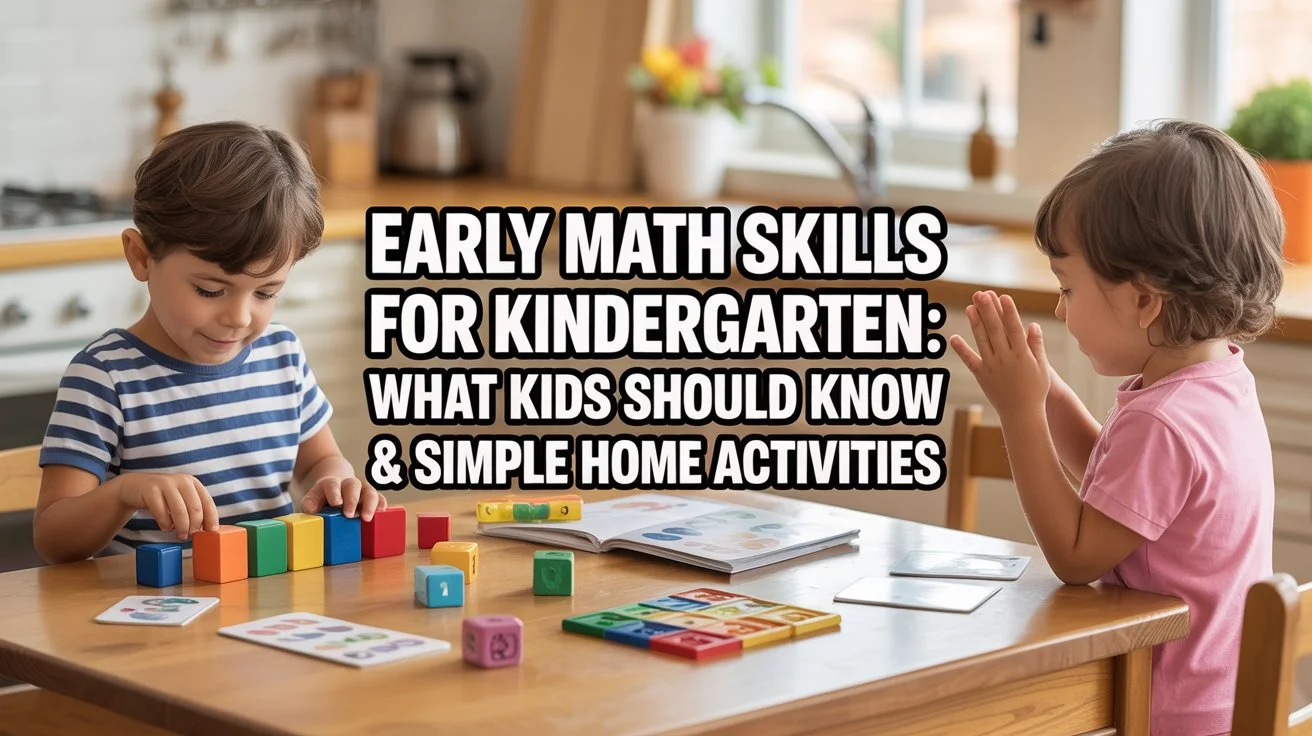



Early math is not about pressure or perfection. It’s about helping your child feel comfortable with numbers, building curiosity, and slowly growing their confidence.
At this age, children learn best through play, repetition, and everyday moments. In fact, simple things like counting toys, sorting objects, or noticing shapes around the house can become powerful learning experiences. With the right math activities for kindergarten, learning feels natural and fun instead of stressful.
In this guide, you’ll learn what math skills your child really needs, easy activities you can try at home, how to use kindergarten math worksheets in a simple way, and how to support your child without pressure. Let’s make math easy, enjoyable, and fear-free for your child.
Early math is not just about numbers. It helps children:
Children who develop strong basics early often feel more comfortable as math gets more advanced.
Here are the key skills every child should begin to understand:
Skill Area | What Children Should Know | Simple Example |
| Number Recognition | Identify numbers 1–20 | Pointing to numbers in books |
| Counting | Count objects up to 20 | Counting toys |
| Basic Addition | Understand combining | 2 apples + 1 apple |
| Basic Subtraction | Understand taking away | 3 candies – 1 candy |
| Shapes | Recognize basic shapes | Circle, square, triangle |
| Patterns | Identify simple patterns | Red-blue-red |
| Measurement | Compare big/small, tall/short | Comparing two objects |
| Sorting | Group similar items | Sorting colors |
Know more Kindergarten Readiness Guide 2026: Skills, Checklist & Requirements Every Parent Should Know
You don’t need fancy tools. Everyday items work perfectly.
These math activities for kindergarten make learning natural and fun.
Know What Should a Child Know Before Kindergarten? Full Skill Breakdown,
Worksheets are helpful, but only when used the right way.
Worksheet Type | Purpose |
| Counting Worksheets | Practice numbers |
| Number Tracing | Improve writing skills |
| Addition Sheets | Introduce basic sums |
| Shape Worksheets | Learn shapes |
| Pattern Worksheets | Build logical thinking |
This is a common question for parents.
Feature | Pre-K Worksheets | Kindergarten Worksheets |
| Level | Beginner | Slightly advanced |
| Numbers | 1–10 | 1–20 and beyond |
| Activities | Matching, tracing | Addition, patterns |
| Goal | Get familiar | Build understanding |
Even with good intentions, some mistakes can slow learning.
Look for these positive signs:
Here’s how you can make math part of daily life:
While home activities are great, children also benefit from guided learning.
A structured course:
Unlock your child's true potential with a free one-on-one academic assessment. Identify strengths, improve weak areas, and build confidence with expert guidance.
Get a Free Assessment
Every child can learn maths, they just need the right approach.
At Interval Learning, we focus on:
Early math is not about being fast or perfect. It’s about building comfort, curiosity, and confidence.
With simple home activities, the right use of kindergarten math worksheets, and consistent support, your child can develop strong foundations that last a lifetime.
And when guided the right way, through programs like interval learning, math becomes not just easy, but enjoyable.
Because every child deserves to feel confident in math.
Enroll in Interval Learning’s Online Kindergarten Course and help your child build strong basics, remove fear, and grow with confidence.
Most children start around ages 4–6. However, learning can begin earlier through play and simple pre-K math worksheets.
Use games, daily activities, and short learning sessions. Keep it fun and relaxed.
No. Worksheets help, but they should be combined with real-life math activities for kindergarten.
Start small, avoid pressure, and focus on understanding. Programs like Interval Learning help remove fear step by step.
Daily short sessions (10–15 minutes) are more effective than long study hours.
Because we focus on concept clarity, confidence building, personalized learning, and a fear-free approach