Why the First 30 Days of the Academic Year Matter Most
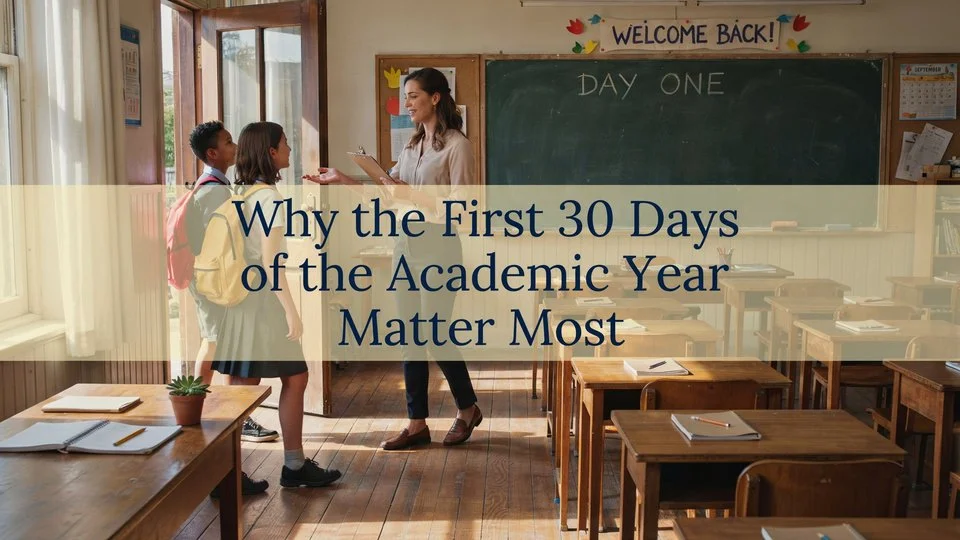



The beginning of a new academic year is much more important than many students and parents realize. The first 30 days often set the tone for the entire year. During this period, students build routines, understand new concepts, develop learning habits, and adjust to new academic expectations.
A strong start can lead to better grades, higher confidence, and less stress throughout the year. On the other hand, falling behind in the first few weeks can make it harder to catch up later.
For parents, this is the perfect time to support their child’s learning journey. For students, it is an opportunity to create habits that lead to long-term success.
The first 30 days of a new academic year can have a big impact on a student's success.
The first few weeks are when students build their daily routines. Regular study, completing homework on time, and revising lessons can quickly become good habits that last all year.
After the school break, students are fresh and ready to learn. This is a great time to understand new concepts and build a strong academic foundation.
When students understand lessons, participate in class, and achieve small successes early on, they feel more confident and motivated to learn.
The topics taught at the beginning of the year often form the base for future chapters. Understanding these concepts early makes learning easier as the syllabus progresses.
Students who receive the right guidance during the first month are more likely to stay on track, avoid learning gaps, and achieve better academic results throughout the year.
Early Actions | Long-Term Benefits |
| Regular study schedule | Better time management |
| Active class participation | Improved understanding |
| Completing homework on time | Consistent academic progress |
| Asking questions early | Stronger conceptual clarity |
| Reviewing lessons daily | Better exam preparation |
| Seeking support when needed | Reduced learning gaps |
Students who stay consistent during the first month often find it easier to manage academic pressure later in the year.
Good study habits are not created overnight. The first few weeks are the ideal time to develop them.
A fixed study schedule helps students stay organized and avoid last-minute stress.
Even 20–30 minutes of revision can improve memory retention significantly.
Small achievements build confidence and motivation.
Maintain subject-wise notebooks, assignments, and study materials.
Creating a dedicated study space improves focus and productivity.
Many academic challenges can be traced back to the first few weeks.
When these issues are not addressed early, they tend to grow as the syllabus becomes more advanced.
Parents play a critical role in helping children transition smoothly into a new academic year.
Children often perform better when parents show interest in their learning journey.
Avoiding these mistakes can save months of stress later in the year:
Mistake | Why It Can Be a Problem | Better Approach |
| "I'll start studying later" | Delaying studies can lead to poor habits and learning gaps. | Start with just 30 minutes of daily study from the beginning. |
| Not revising lessons | It's easy to forget what was learned in class. | Spend 10 minutes reviewing lessons each day. |
| Ignoring doubts | Small doubts can become bigger problems later. | Ask questions and clear doubts as soon as possible. |
| Studying without a routine | Lack of structure can make learning less effective. | Follow a simple study timetable every week. |
| Missing classes | Important concepts may be missed. | Attend classes regularly and catch up quickly if you miss one. |
A few good habits in the first month can make the rest of the academic year much easier and more successful.
Know more about the Common Mistakes Students Make at the Start of School and How to Build Study Habits for Students
Unlock your child's true potential with a free one-on-one academic assessment. Identify strengths, improve weak areas, and build confidence with expert guidance.
Get a Free Assessment
Many students wait until exam season to seek help. By then, learning gaps may have already become difficult to address.
Starting academic support early provides several advantages:
Early Support Benefits | Impact |
| Better concept clarity | Stronger understanding |
| Consistent practice | Improved performance |
| Regular guidance | Increased confidence |
| Doubt-solving support | Reduced academic stress |
| Personalized attention | Faster improvement |
Online tuition has become one of the most effective ways to support students throughout the academic year.
Students who receive regular academic guidance often stay more confident and prepared throughout the year.
Parents should watch for these early indicators:
Addressing these signs early can prevent larger academic challenges later.
Success in academics is rarely about intelligence alone.
It is usually the result of:
The first 30 days provide the perfect opportunity to establish these success factors.
At Interval Learning, we believe that a strong academic year begins with a strong start.
Our expert educators help students:
We provide personalized online academic tuition for students from Class 1 to Class 12, making quality education accessible from the comfort of home.
Whether a student needs help with foundational concepts or advanced topics, our experienced teachers provide structured guidance every step of the way.
During the first few weeks, students develop study habits, adapt to new subjects, build confidence, and establish routines that often influence their performance throughout the year. A strong start helps students stay motivated, understand concepts more effectively, and avoid academic stress later in the year. That's why providing the right guidance early can have a lasting impact on academic success.
At Interval Learning, we believe that the first 30 days should not be left to chance. That's why we are here with expert online tutors, structured courses, and a learning system built for every class from 1 to 12.
Whether your child needs help strengthening core concepts, improving confidence in challenging subjects, or maintaining consistent academic progress, Interval's structured online learning programs are designed to support students at every stage of their educational journey.
The first month helps students establish routines, understand expectations, and build the foundation for academic success throughout the year.
Parents can encourage consistent study habits, provide a positive learning environment, and seek additional academic support when necessary.
Early tuition helps students strengthen concepts, improve confidence, and prevent learning gaps before they become larger challenges.
Good study habits improve time management, understanding, retention, and overall academic achievement.
Students should seek support as soon as they experience difficulty understanding concepts or keeping up with schoolwork.
Interval Learning provides expert online academic tuition, personalized guidance, concept-based learning, and continuous academic support for students from Class 1 to Class 12.

Unlock your child's true potential with a free one-on-one academic assessment. Identify strengths, improve weak areas, and build confidence with expert guidance.
Get a Free Assessment